5 Free Tools to Experiment with LLMs in Your Browser

Discover five free tools that let you run and test large language models directly in your browser without any setup.
Like
0
Liked
Liked
Discover five free tools that let you run and test large language models directly in your browser without any setup.
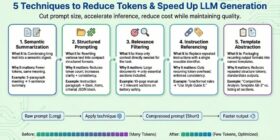
Large language models (LLMs) are mainly trained to generate text responses to user queries or prompts, with complex reasoning under the hood that not only involves language generation by predicting each next token in the output sequence, but also entails a deep understanding of the linguistic patterns surrounding the user input text.
By the “benevolent nature of capitalism,” I mean the fact that it promotes human life and well-being and does so for everyone.

Goldman Sachs has led Harness’s Series E round, with participation from IVP, Menlo Ventures, and Unusual Ventures.
The behaviors that get you promoted The post How to Climb the Hidden Career Ladder of Data Science appeared first on Towards Data Science.
In this tutorial, we explore hierarchical Bayesian regression with NumPyro and walk through the entire workflow in a structured manner. We start by generating synthetic data, then we define a probabilistic model that captures both global patterns and group-level variations. Through each snippet, we set up inference using NUTS, analyze posterior distributions, and perform posterior predictive checks to understand how well our model captures the underlying structure. By approaching the tutorial step by step, we build an intuitive […]
Standard LLMs rely on prompt engineering to fix problems (hallucinations, poor response, missing information) that come from issues in the backend architecture. If the backend (corpus processing) is properly built from the ground up, it is possible to offer a full, comprehensive answer to a meaningful prompt, without the need for multiple prompts, rewording your query, having to go through a chat session, or prompt engineering. In this article, I explain how to do it, focusing on enterprise […]
I frequently refer to OpenAI and the likes as LLM 1.0, by contrast to our xLLM architecture that I present as LLM 2.0. Over time, I received a lot of questions. Here I address the main differentiators. First, xLLM is a no-Blackbox, secure, auditable, double-distilled agentic LLM/RAG for trustworthy Enterprise AI, using 10,000 fewer (multi-)tokens, no vector database but Python-native, fast nested hashes in its original version, and no transformer to generate the structured output to a prompt. […]
Use Gemini, Search, Pixel and more to make holiday planning feel effortless in 2025.