The Ian Freeman false imprisonment

How it happened and what to do about it The post The Ian Freeman false imprisonment appeared first on Downsize DC.
Like
0
Liked
Liked
How it happened and what to do about it The post The Ian Freeman false imprisonment appeared first on Downsize DC.

Coding with large language models (LLMs) holds huge promise, but it also exposes some long-standing flaws in software: code that’s messy, hard to change safely, and often opaque about what’s really happening under the hood. Researchers at MIT’s Computer Science and Artificial Intelligence Laboratory (CSAIL) are charting a more “modular” path ahead. Their new approach breaks systems into “concepts,” separate pieces of a system, each designed to do one job well, and “synchronizations,” explicit rules that describe exactly […]

Author(s): Asjad Abrar Originally published on Towards AI. Why Apple is Losing the AI Race (And Why It Might Not Matter) We are experiencing the most serious technology arms race since the Internet became public. Since the extraordinary launch of ChatGPT in November 2022, artificial intelligence has changed from a specialty computer science area into a trillion-dollar battleground where tech giants are risking their future. Tim Cook adressing the new AI enhancements in the latest Apple ChipsetThe article […]
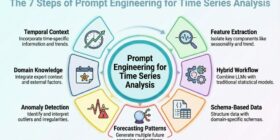
Strange as it may sound, large language models (LLMs) can be leveraged for data analysis tasks, including specific scenarios such as time series analysis.
How do you keep RAG systems accurate and efficient when every query tries to stuff thousands of tokens into the context window and the retriever and generator are still optimized as 2 separate, disconnected systems? A team of researchers from Apple and University of Edinburgh released CLaRa, Continuous Latent Reasoning, (CLaRa-7B-Base, CLaRa-7B-Instruct and CLaRa-7B-E2E) a retrieval augmented generation framework that compresses documents into continuous memory tokens and then performs both retrieval and generation in that shared latent space. […]

To make large language models (LLMs) more accurate when answering harder questions, researchers can let the model spend more time thinking about potential solutions. But common approaches that give LLMs this capability set a fixed computational budget for every problem, regardless of how complex it is. This means the LLM might waste computational resources on simpler questions or be unable to tackle intricate problems that require more reasoning. To address this, MIT researchers developed a smarter way to allocate […]
For powering next-generation AI models in 2026, Bright Data’s Web Scraper API delivers on all fronts: dynamic site support, anti-bot automation, structured output, and global reach.

Espaço foi construído para receber atividades como workshops, estudos e encontros que aprofundem o diálogo sobre infância, educação e formação de leitores

This article is divided into four parts; they are: • Optimizers for Training Language Models • Learning Rate Schedulers • Sequence Length Scheduling • Other Techniques to Help Training Deep Learning Models Adam has been the most popular optimizer for training deep learning models.
In this tutorial, we build an advanced meta-cognitive control agent that learns how to regulate its own depth of thinking. We treat reasoning as a spectrum, ranging from fast heuristics to deep chain-of-thought to precise tool-like solving, and we train a neural meta-controller to decide which mode to use for each task. By optimizing the trade-off between accuracy, computation cost, and a limited reasoning budget, we explore how an agent can monitor its internal state and adapt its […]