Top 20 CatBoost Interview Questions and Answers (Part 1 of 2)

Machine Learning Interview Preparation Part 38 Continue reading on Towards AI »
Like
0
Liked
Liked

Machine Learning Interview Preparation Part 38 Continue reading on Towards AI »
arXiv:2604.13191v1 Announce Type: new Abstract: Many materials show anisotropic light scattering patterns due to the shape and local alignment of their underlying micro structures: surfaces with small elements such as fibers, or the ridges of a brushed metal, are very sparse and require a high spatial resolution to be properly represented as a volume. The acquisition of voxel data from such objects is a time and memory-intensive task, and most rendering approaches require an additional Level-of-Detail (LoD) data […]
arXiv:2602.06207v1 Announce Type: new Abstract: Wireless capsule endoscopy (WCE) has transformed gastrointestinal (GI) diagnostics by enabling noninvasive visualization of the digestive tract, yet its diagnostic yield remains constrained by the absence of biopsy capability, as histological analysis is still the gold standard for confirming disease. Conventional biopsy using forceps, needles, or rotating blades is invasive, limited in reach, and carries risks of perforation or mucosal trauma, while fluid- or microbiota-sampling capsules cannot provide structured tissue for pathology, leaving […]
Same results, different derivation Continue reading on Towards AI »
arXiv:2601.00204v1 Announce Type: new Abstract: 3D morphing remains challenging due to the difficulty of generating semantically consistent and temporally smooth deformations, especially across categories. We present MorphAny3D, a training-free framework that leverages Structured Latent (SLAT) representations for high-quality 3D morphing. Our key insight is that intelligently blending source and target SLAT features within the attention mechanisms of 3D generators naturally produces plausible morphing sequences. To this end, we introduce Morphing Cross-Attention (MCA), which fuses source and target information […]
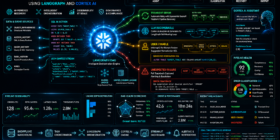
A four-class error matrix — transient, LLM-recoverable, user-fixable, and unexpected — mapped to the Snowflake + LangChain ecosystem. Complete with open-source LLM inference via Cortex AI, tested end-to-end on a Snowflake trial account. TL;DR Every pipeline error belongs to one of four classes: transient, LLM-recoverable, user-fixable, or unexpected Snowflake-specific classification logic is required — a generic OperationalError can mean “retry” or “page someone immediately” LangGraph’s RetryPolicy + ToolNode + interrupt() map cleanly to these four classes Llama 3.3 70B via Cortex AI provides LLM inference with […]

Hay un momento en la historia de cada tecnología en el deja de ser un refugio inmaculado para convertirse en un espacio comercial. La radio lo hizo cuando surgieron los anuncios que financiaron programas, internet lo hizo cuando las páginas se llenaron de banners, las redes sociales lo hicieron cuando los muros de amigos se transformaron en malditos escaparates. Hoy, estamos a punto de ver lo mismo con la primera generación de la inteligencia artificial conversacional, un producto […]

On Tuesday, the US District Court for the District of Massachusetts issued a preliminary injunction blocking the US government from applying a range of restrictions on renewable power development, at least for the parties in the suit. The ruling expands on another that was issued late last year, applying similar logic to a broader set of federal restrictions and an expanded group of renewable energy developers. While the ruling is good news for companies looking to develop non-polluting energy […]
arXiv:2603.08744v1 Announce Type: new Abstract: As the industry’s interest in machine learning has grown in recent years, some solutions have emerged to safely embed them in safety-critical systems, such as the C code generator ACETONE. However, this framework is limited to generating sequential code, which cannot make most of the multi-core architectures. In this paper, we initiate an extension of ACETONE for the generation of parallel code by formally defining our processor assignment problem and surveying the state […]
Part 1: Why Agentic Engineering Isn’t Vibe Coding A friend recently posted about AI skills using The Matrix analogy: Trinity doesn’t learn to fly a helicopter — Tank uploads a precise, verified program directly into her mind. She steps into the cockpit and flies. That analogy is perfect. But it exposes a fundamental misunderstanding about how these systems actually get built. Trinity doesn’t vibe her way into flying. Tank uploads a precise, verified program. That’s the difference between […]