Thinking with Video: The Next Leap in Multimodal AI Reasoning

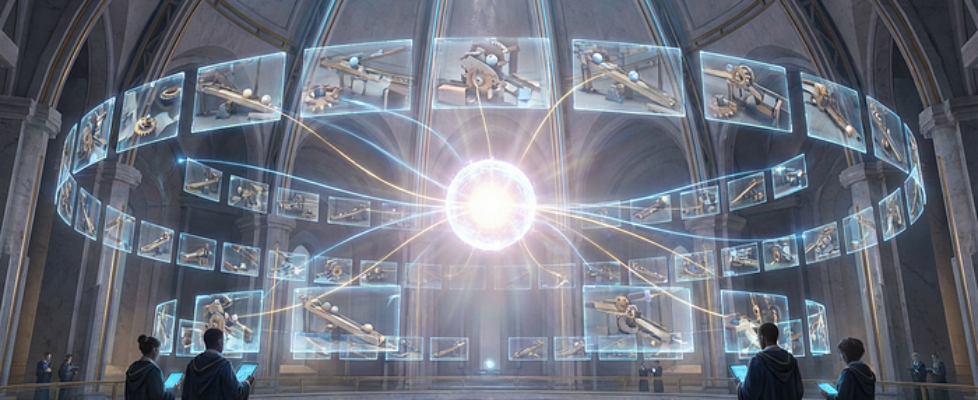
Author(s): Kaushik Rajan Originally published on Towards AI. How video generation models like Sora-2 are bridging the gap between static images and dynamic understanding I still remember the first time I saw a Vision Language Model (VLM) describe a complex image. It felt like magic. But then I asked it to predict what would happen next in a chaotic street scene, and the magic faded. It struggled. It could see the “now,” but it was blind to the “next.” Credit: Generative AI (Google Nano Banana Pro). Prompted by the author.This article discusses the evolution of artificial intelligence (AI) reasoning from static to dynamic models, emphasizing the importance of video generation in enhancing AI’s understanding of physics, causality, and time. By presenting new paradigms such as “Thinking with Video,” particularly exemplified by models like Sora-2, the author illustrates how these models simulate future events, providing deeper insights compared to traditional Vision Language Models (VLMs). The article also introduces the VideoThinkBench as a benchmark for evaluating the reasoning capabilities of video generation models in various tasks, including predicting outcomes and problem-solving in dynamic contexts. Read the full blog for free on Medium. Join thousands of data leaders on the AI newsletter. Join over 80,000 subscribers and keep up to date with the latest developments in AI. From research to projects and ideas. If you are building an AI startup, an AI-related product, or a service, we invite you to consider becoming a sponsor. Published via Towards AI
