The AI Bubble Will Pop — And Why That Doesn’t Matter
How history’s biggest tech bubble explains where AI is headed next The post The AI Bubble Will Pop — And Why That Doesn’t Matter appeared first on Towards Data Science.
Please post below I want to read what people have to say. submitted by /u/mapsandwrestling [link] [comments]
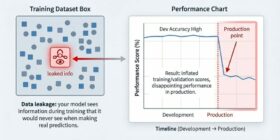
Data leakage is an often accidental problem that may happen in machine learning modeling.
We’re bringing Gemini’s state-of-the-art translation model to Google Translate for text, and more new features.
Large language models (LLMs) sometimes learn the wrong lessons, according to an MIT study. Rather than answering a query based on domain knowledge, an LLM could respond by leveraging grammatical patterns it learned during training. This can cause a model to fail unexpectedly when deployed on new tasks. The researchers found that models can mistakenly link certain sentence patterns to specific topics, so an LLM might give a convincing answer by recognizing familiar phrasing instead of understanding the […]
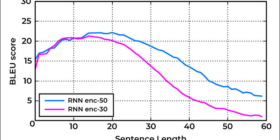
Author(s): VARUN MISHRA Originally published on Towards AI. Unveiling the BLEU Score: Your Guide to Judging Machine Translation Quality Machine translation has come a long way, from clunky rule-based systems to sleek neural models like Transformers. But how do we know if a machine’s translation is any good? Enter the BLEU score — a go-to metric for evaluating machine translation quality. Short for Bilingual Evaluation Understudy, BLEU is like a judge that compares a machine’s output to human […]
submitted by /u/bigdonut100 [link] [comments]
Any motorist who has ever waited through multiple cycles for a traffic light to turn green knows how annoying signalized intersections can be. But sitting at intersections isn’t just a drag on drivers’ patience — unproductive vehicle idling could contribute as much as 15 percent of the carbon dioxide emissions from U.S. land transportation. A large-scale modeling study led by MIT researchers reveals that eco-driving measures, which can involve dynamically adjusting vehicle speeds to reduce stopping and excessive […]
3D printing has come a long way since its invention in 1983 by Chuck Hull, who pioneered stereolithography, a technique that solidifies liquid resin into solid objects using ultraviolet lasers. Over the decades, 3D printers have evolved from experimental curiosities into tools capable of producing everything from custom prosthetics to complex food designs, architectural models, and even functioning human organs. But as the technology matures, its environmental footprint has become increasingly difficult to set aside. The vast majority […]
Norway is the world’s largest producer of farmed Atlantic salmon and a top exporter of seafood, while the United States remains the largest importer of these products, according to the Food and Agriculture Organization. Two MIT students recently traveled to Trondheim, Norway to explore the cutting-edge technologies being developed and deployed in offshore aquaculture. Beckett Devoe, a senior in artificial intelligence and decision-making, and Tony Tang, a junior in mechanical engineering, first worked with MIT Sea Grant through […]