Why Cursor’s CEO believes OpenAI, Anthropic competition won’t crush his startup
After reaching $1 billion in annualized revenue, Anysphere CEO Michael Truell explained the features his company is focused on building out.
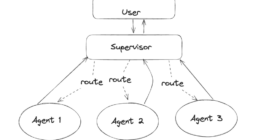
Understanding how LLM agents transfer control to each other in a multi-agent system with LangGraph The post How Agent Handoffs Work in Multi-Agent Systems appeared first on Towards Data Science.
An overview, summary, and position of cutting-edge research conducted on the emergent topic of LLM introspection on self internal states
I’ve seen a lot of people talking about opening the borders, and that would be fine if all those Democrat states didn’t exist. Until anarcho-capitalism is implemented, it’s better to keep the borders closed. submitted by /u/AmirSuS123 [link] [comments]
Joe Navarro is a former FBI agent and one of the world’s leading experts in body language and nonverbal communication. In this Moment, Joe reveals the hidden signals behind body language and how to use nonverbal cues, such as posture and eye contact, to your advantage in business, relationships, and beyond. Listen to the full episode with Joe Navarro on The Diary of a CEO below: Spotify: https://g2ul0.app.link/01Qhc2kbPYb Apple: https://g2ul0.app.link/NwkCj5obPYb Watch the Episodes On YouTube:https://www.youtube.com/c/%20TheDiaryOfACEO/videos Joe Navarro: https://www.jnforensics.com/
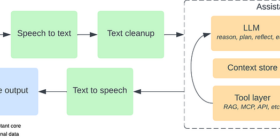
Author(s): Cosmo Q Originally published on Towards AI. Why your next assistant might run entirely on your own hardware. This past Thanksgiving, I set out to build a fully local voice assistant which should listen, think, act, and speak without relying on the cloud service. Why bother? Because today’s mainstream assistants are still tied to the cloud, limited by product rules, and hard to customize. Meanwhile, the AI development in the last two years completely changed what individuals […]
As expected and following multiple reports, OpenAI officially announced the GPT-5.2 model. For those unaware, it’s a product that the company fast-tracked out of the heat it’s facing from the success of the latest models from Google and Anthropic. Not to forget, the GPT-5.2 is OpenAI’s second biggest update since the company officially launched GPT-5 in August. GPT-5.2 is here with improved raw performance results In the announcement, OpenAI describes GPT-5.2 as its “most capable model series yet […]
In the wilderness of the New World, the Plymouth Pilgrims had progressed from the false dream of communism to the sound realism of capitalism.
More than 300 people across academia and industry spilled into an auditorium to attend a BoltzGen seminar on Thursday, Oct. 30, hosted by the Abdul Latif Jameel Clinic for Machine Learning in Health (MIT Jameel Clinic). Headlining the event was MIT PhD student and BoltzGen’s first author Hannes Stärk, who had announced BoltzGen just a few days prior. Building upon Boltz-2, an open-source biomolecular structure prediction model predicting protein binding affinity that made waves over the summer, BoltzGen (officially released on Sunday, […]
Dimensionality reduction techniques like PCA work wonderfully when datasets are linearly separable—but they break down the moment nonlinear patterns appear. That’s exactly what happens with datasets such as two moons: PCA flattens the structure and mixes the classes together. Kernel PCA fixes this limitation by mapping the data into a higher-dimensional feature space where nonlinear patterns become linearly separable. In this article, we’ll walk through how Kernel PCA works and use a simple example to visually compare PCA […]