10 GitHub Repositories to Master Vibe Coding

Explore top GitHub repositories to help you master this new style of coding and ship full-stack products faster than ever.
Like
0
Liked
Liked
Explore top GitHub repositories to help you master this new style of coding and ship full-stack products faster than ever.

Tokamaks are machines that are meant to hold and harness the power of the sun. These fusion machines use powerful magnets to contain a plasma hotter than the sun’s core and push the plasma’s atoms to fuse and release energy. If tokamaks can operate safely and efficiently, the machines could one day provide clean and limitless fusion energy. Today, there are a number of experimental tokamaks in operation around the world, with more underway. Most are small-scale research […]
We’re bringing our most intelligent model yet, Gemini 3 Pro, to Google Search in more countries around the world.
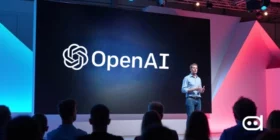
At this point, Google and OpenAI are battling it out neck to neck in terms of AI models. Earlier today, we reported that Google is finalizing an affordable image generation model that offers somewhat similar image quality as the Nano Banana Pro model. Here, the image generation model in question is the Nano Banana 2 Flash, and it will reportedly be powered by Gemini 3 Flash. OpenAI is reportedly testing a new AI image model Now, OpenAI appears […]

Spoor’s computer vision software can help wind farms, and other industries, track bird populations and migration patterns.
For decades, it’s been known that subtle chemical patterns exist in metal alloys, but researchers thought they were too minor to matter — or that they got erased during manufacturing. However, recent studies have shown that in laboratory settings, these patterns can change a metal’s properties, including its mechanical strength, durability, heat capacity, radiation tolerance, and more. Now, researchers at MIT have found that these chemical patterns also exist in conventionally manufactured metals. The surprising finding revealed a […]
submitted by /u/bigdonut100 [link] [comments]

Anthropic, Block, and OpenAI are backing the Linux Foundation’s new Agentic AI Foundation, donating MCP, Goose, and AGENTS.md to standardize AI agents, boost interoperability, and curb proprietary fragmentation.
I frequently refer to OpenAI and the likes as LLM 1.0, by contrast to our xLLM architecture that I present as LLM 2.0. Over time, I received a lot of questions. Here I address the main differentiators. First, xLLM is a no-Blackbox, secure, auditable, double-distilled agentic LLM/RAG for trustworthy Enterprise AI, using 10,000 fewer (multi-)tokens, no vector database but Python-native, fast nested hashes in its original version, and no transformer to generate the structured output to a prompt. […]
Barry Levinson was one of the most successful directors in America around 1990, when he made Avalon, an immigrant Thanksgiving movie trying to sum up the transformation of the American family in the 20th century. Continue Reading…