On the Challenge of Converting TensorFlow Models to PyTorch
How to upgrade and optimize legacy AI/ML models The post On the Challenge of Converting TensorFlow Models to PyTorch appeared first on Towards Data Science.
Learn how OpenAI’s new certifications and AI Foundations courses help people build real-world AI skills, boost career opportunities, and prepare for the future of work.
OpenAI researchers are testing “confessions,” a method that trains models to admit when they make mistakes or act undesirably, helping improve AI honesty, transparency, and trust in model outputs.
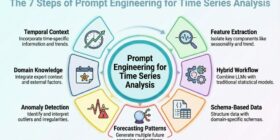
Strange as it may sound, large language models (LLMs) can be leveraged for data analysis tasks, including specific scenarios such as time series analysis.
As countries across the world experience a resurgence in nuclear energy projects, the questions of where and how to dispose of nuclear waste remain as politically fraught as ever. The United States, for instance, has indefinitely stalled its only long-term underground nuclear waste repository. Scientists are using both modeling and experimental methods to study the effects of underground nuclear waste disposal and ultimately, they hope, build public trust in the decision-making process. New research from scientists at MIT, […]
This article introduces the Gaussian Mixture Model as a natural extension of k-Means, by improving how distance is measured through variances and the Mahalanobis distance. Instead of assigning points to clusters with hard boundaries, GMM uses probabilities learned through the Expectation–Maximization algorithm – the general form of Lloyd’s method. Using simple Excel formulas, we implement EM step by step in 1D and 2D, and we visualise how the Gaussian curves or ellipses move during training. The means shift, […]
How to keep moving forward when your organization’s strategy is evolving and conditions keep shifting.
On the challenges of producing reliable insights and avoiding common mistakes The post TDS Newsletter: How to Design Evals, Metrics, and KPIs That Work appeared first on Towards Data Science.
submitted by /u/m4moz [link] [comments]
In March of 2020, I published an essay warning both the public and our policymakers against overreacting to the COVID threat. We overreact, I argued, in times of “epistemic uncertainty,” when we do not know enough about a threat we face and are unclear about our best response. Continue Reading…