Prompt Engineering for Outlier Detection

Learn how to detect outliers by doing a real-life data project and improve the process with AI.
Like
0
Liked
Liked
Learn how to detect outliers by doing a real-life data project and improve the process with AI.
We’re bringing Gemini’s state-of-the-art translation model to Google Translate for text, and more new features.
Chelsea Follett The debut of the robot butler NEO has drawn widespread ridicule. Unable to perform many chores without a remote human operator, the machine has become a target of social media backlash. Videos circulating online show the robot struggling with basic tasks, such as closing a dishwasher. , But don’t underestimate the potential of robotic housekeepers just yet. The technology is dawning at an opportune time. Consider the growing concerns about plummeting birth rates. Last year saw […]
Los Angeles, December 11, 2025 — Marktechpost has released ML Global Impact Report 2025 (AIResearchTrends.com). This educational report’s analysis includes over 5,000 articles from more than 125 countries, all published within the Nature family of journals between January 1 and September 30, 2025. The scope of this report is strictly confined to this specific body of work and is not a comprehensive assessment of global research.This report focuses solely on the specific work presented and does not represent […]
A new NeurIPS 2025 paper shows how self-supervised learning imbues ViT with better image understanding than supervised learning The post Do Labels Make AI Blind? Self-Supervision Solves the Age-Old Binding Problem appeared first on Towards Data Science.

Let’s say an environmental scientist is studying whether exposure to air pollution is associated with lower birth weights in a particular county. They might train a machine-learning model to estimate the magnitude of this association, since machine-learning methods are especially good at learning complex relationships. Standard machine-learning methods excel at making predictions and sometimes provide uncertainties, like confidence intervals, for these predictions. However, they generally don’t provide estimates or confidence intervals when determining whether two variables are related. […]

Author(s): Laura Verghote Originally published on Towards AI. A practical step-by-step guide with study tips, resources, and exam insights that actually work Passing the AI 900 Microsoft Azure AI Fundamentals exam in a single day might sound bold, but if you already understand basic AI concepts or have cloud experience with another provider, it is absolutely possible. I managed it with solid AI and AWS knowledge, even though I was completely new to Azure. Free full article for […]
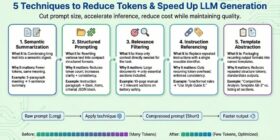
Large language models (LLMs) are mainly trained to generate text responses to user queries or prompts, with complex reasoning under the hood that not only involves language generation by predicting each next token in the output sequence, but also entails a deep understanding of the linguistic patterns surrounding the user input text.

In this article, we explore LOF through three simple steps: distances and neighbors, reachability distances, and the final LOF score. Using tiny datasets, we see how two anomalies can look obvious to us but completely different to different algorithms. This reveals the key idea of unsupervised learning: there is no single “true” outlier, only definitions. Understanding these definitions is the real skill. The post The Machine Learning “Advent Calendar” Day 9: LOF in Excel appeared first on Towards […]
In Day 6, we saw how a Decision Tree Regressor finds its optimal split by minimizing the Mean Squared Error. Today, for Day 7 of the Machine Learning “Advent Calendar”, we switch to classification. With just one numerical feature and two classes, we explore how a Decision Tree Classifier decides where to cut the data, using impurity measures like Gini and Entropy. Even without doing the math, we can visually guess possible split points. But which one is […]